
Views: 0 Author: Site Editor Publish Time: 2026-10-09 Origin: Site


A water pump acts as the mechanical heart of thermal management, infrastructure, and heavy equipment systems. When this component fails, operations stop. A seized bearing on a diesel engine leads to immediate overheating and warped cylinder heads. On a paving site, a dead spray system means asphalt sticks to the compaction drum, ruining the mat finish. At its core, this device converts mechanical or electrical energy into hydraulic flow. It moves fluids against gravity and pipe friction. Specifying the wrong unit introduces severe risks. Cavitation destroys impellers in days. Inadequate flow rates cause localized boiling in cooling jackets. Premature seal wear dumps hazardous fluids onto the ground. We built this technical guide to help equipment managers and field mechanics. You will learn to match pump specifications to exact operational demands. We cover mechanical drives, electric variants, and specialized heavy machinery applications.
Application Dictates Specification: The primary use case—whether engine cooling, industrial fluid transfer, site dewatering, or dust suppression—must drive the choice between centrifugal and positive displacement mechanisms.
Electric vs. Mechanical Trade-offs: Transitioning to a 12V electric water pump offers precise flow control independent of engine RPM, but requires careful electrical load evaluation.
Specialized Machinery Requirements: Heavy equipment demands purpose-built solutions, such as a road roller spray system pump, to maintain operational compliance and prevent material adhesion during compaction.
Internal combustion engines generate massive thermal loads. A pump forces coolant through the engine block water jackets to absorb combustion heat. The fluid navigates the cylinder head, pulling heat away from the exhaust valves and combustion chambers. It then travels through the upper radiator hose into the heat exchanger. The pump maintains a specific flow velocity. If the coolant moves too fast, it won't absorb enough heat. If it moves too slow, localized boiling occurs. This continuous circulation prevents thermal warping of aluminum cylinder heads. It stops engine oil from breaking down under extreme temperatures. Reliable circulation prevents catastrophic engine failure during heavy load operations, like a bulldozer pushing wet clay. Thermostats work alongside the pump to regulate flow based on real-time temperature data. When the engine runs cold, a bypass valve routes fluid back to the pump inlet. Once operating temperature is reached, the thermostat opens, and full radiator circulation begins.
Construction environments demand rigorous dust control measures. OSHA regulations require continuous suppression of silica dust on active sites. Pumps deliver metered water to spray nozzles mounted on heavy machinery, crushers, and sweepers. High-vibration environments test equipment durability constantly. You need robust seals and heavy-duty bearings to survive these conditions. The pump draws from an onboard tank and pressurizes the distribution manifold. Atomized water droplets capture airborne dust particles effectively, dropping them to the ground. This process protects worker respiratory health and ensures regulatory compliance. Equipment operators rely on consistent pump pressure to maintain uniform spray coverage across the work zone. If pressure drops, the nozzles spit large drops instead of a fine mist, wasting water and failing to capture fine silica dust. Inline strainers protect the pump inlet from tank debris, while pressure relief valves prevent manifold damage if a nozzle clogs.
Industrial facilities move massive fluid volumes daily. Elevation changes create significant head pressure. Pumps overcome this gravitational resistance to transport liquids vertically. Multi-stage manufacturing relies on consistent flow for chemical mixing and cooling processes. Municipal water supplies require massive pumping stations to maintain grid pressure. Commercial high-rise buildings utilize booster pumps to reach upper floors. HVAC systems depend on circulation pumps to move chilled or heated water through extensive pipe networks. Proper sizing ensures adequate pressure reaches the furthest terminal units in the building. Engineers calculate friction loss through pipes, elbows, and valves to specify the correct impeller size and motor horsepower. Using undersized piping forces the pump to work harder, drawing excess amperage and generating unwanted heat in the motor windings.
Groundwater frequently floods construction trenches and deep excavations. Storm runoff inundates mining sites and quarry operations. Submersible and trash pumps remove this liquid efficiently. They handle suspended solids, mud, and abrasive debris without clogging. Residential and commercial sectors need reliable drainage systems. Sump pumps prevent structural water damage in basements and underground parking garages. They manage wastewater and direct it to municipal sewer lines. Float switches activate these pumps automatically when water levels rise. High-capacity drainage units clear flooded areas rapidly to minimize downtime and property damage. In the field, mechanics look for pumps with hardened cast iron impellers and thick wear plates. Pumping sandy water acts like liquid sandpaper, eroding standard aluminum components in a matter of days. A heavy-duty trash pump allows operators to open the volute quickly, clear out rocks or debris, and get the unit back online without specialized tools.
Belt-driven mechanical units connect directly to the engine crankshaft via a serpentine or V-belt. They suffer from continuous parasitic power loss. Flow rates depend entirely on engine RPM. Low engine speeds result in low cooling capacity, even if the thermal load remains high. High RPMs can over-pressurize the system unnecessarily. Transitioning to a 12V Electric Water Pump solves these inherent inefficiencies. It offers precise flow control managed by the engine control unit (ECU) or a standalone PWM controller. The controller dictates output based on real-time temperature sensors rather than engine speed. You gain the advantage of post-engine-shutdown cooling. The pump continues running to prevent heat soak after heavy operation. Removing the mechanical drive belt also reduces engine drag, freeing up horsepower and improving overall fuel efficiency. Electric units eliminate the physical side-load on the pump bearings caused by tight drive belts, extending the mechanical lifespan of the rotating assembly.
Centrifugal models use spinning impellers to accelerate fluid outward. They excel in high-volume, low-pressure applications. Automotive cooling systems and facility drainage networks use them extensively. The fluid enters the center of the impeller and exits at the outer edge. System resistance directly impacts their output volume. If you restrict the discharge pipe, flow drops significantly. Positive displacement models operate differently. They trap a fixed volume of fluid and force it through the discharge port. They deliver high pressure and provide precise flow metering. Gear, lobe, and diaphragm pumps fall into this category. System resistance does not significantly impact their output volume. They push the same amount of fluid per revolution regardless of downstream pressure. They are ideal for high-viscosity fluids and high-pressure spray applications. If you block the discharge of a positive displacement pump, it will build pressure until a hose bursts or the motor stalls, making pressure relief valves mandatory.
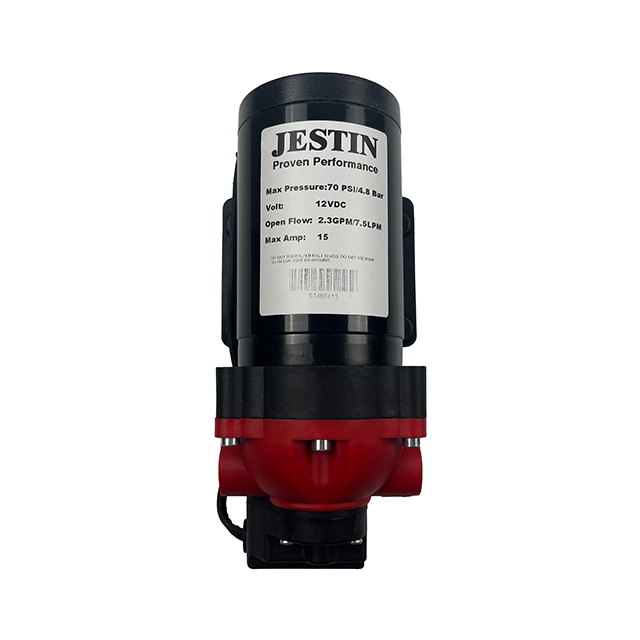
Asphalt compaction requires constant drum lubrication. A Road Roller Water Pump prevents hot asphalt from sticking to the steel surface. Soil adhesion ruins the smooth finish of the compaction drum. Pump failure mars the paving job instantly. The entire paving train must halt to clean the drums. This causes massive delays and material waste. The pump draws water from a primary tank and feeds the front and rear spray bars. Operators adjust the flow rate based on asphalt temperature and mix design. Reliable water delivery ensures a flawless mat finish and prevents costly rework on highway projects. Modern rollers use intermittent timer modules. The operator sets the pump to cycle on and off, conserving tank water while maintaining enough drum moisture to prevent sticking. Scraper bars work in tandem with the spray system, but without consistent water flow, the scrapers simply smear the hot asphalt across the drum.
A reliable Road Roller Spray System Pump must maintain consistent nozzle pressure. It must resist sediment drawn from the water tank. Construction site water sources often contain sand and debris. This particulate matter destroys weak mechanical seals quickly. Vibration tolerance is mandatory for any component mounted on compaction equipment. Diaphragm pumps often outperform centrifugal units in this specific application. They handle dry-running scenarios much better when the water tank empties. They maintain consistent pressure easily across multiple spray nozzles. Built-in filtration protects the internal valves from premature wear. Mechanics mount these pumps using rubber isolation dampeners to absorb the intense shockwaves generated by the roller's eccentric weights. Wiring harnesses require weatherproof Deutsch connectors to prevent moisture intrusion and electrical shorts during operation.
You must calculate the required Gallons Per Minute (GPM) accurately. Base this calculation on the system's thermal load or dewatering volume. Spray systems need a specific GPM per nozzle to achieve proper atomization. Read the pump performance curve provided by the manufacturer. The curve plots flow rate against total dynamic head pressure. Ensure the pump delivers adequate head pressure at your target flow rate. Operating too far left or right on the curve causes inefficiency and vibration. Find the Best Efficiency Point (BEP) for your specific application. Factor in static head (elevation change) and friction head (pipe resistance) when sizing the unit.
Measure the vertical distance from the fluid source surface to the highest discharge point to find your static head.
Count every elbow, valve, and fitting in the plumbing run, as each component adds friction.
Determine the internal diameter of your hoses or pipes; smaller diameters increase friction exponentially.
Consult a friction loss chart to convert your pipe length and fittings into equivalent feet of head.
Add the static head and friction head together to determine your Total Dynamic Head (TDH).
Cross-reference your required GPM and calculated TDH on the manufacturer's pump curve to verify performance.
Housing materials dictate the lifespan of the unit in harsh environments. Cast iron offers extreme durability but adds significant weight to the machine. Aluminum provides a lightweight alternative commonly found in automotive applications. Engineered plastics and composites resist chemical corrosion perfectly. Evaluate internal impeller materials carefully. Choose ceramic or carbon mechanical seals based on the fluid type. Particulates and operating temperatures dictate the optimal seal selection. Silicon carbide seals withstand abrasive fluids better than standard carbon seals.
Housing Material | Weight Profile | Corrosion Resistance | Best Application |
|---|---|---|---|
Cast Iron | Heavy | Moderate (requires coating) | Heavy machinery, industrial fluid transfer |
Cast Aluminum | Lightweight | Good (with proper coolant) | Automotive engine cooling, portable pumps |
Engineered Plastics | Ultra-Light | Excellent | Chemical transfer, 12V auxiliary cooling |
Stainless Steel | Medium | Superior | Food grade processing, harsh dewatering |
Assess the maximum amperage draw for all electrical units. Compare this draw against the vehicle or machine's alternator capacity. Check the battery reserves to ensure adequate power during idle conditions. Ensure seamless integration with existing plumbing and hose diameters. Verify the mounting footprints match the chassis or engine block. Modern electric units often connect directly to CAN bus networks. This allows the main controller to monitor pump speed, temperature, and diagnostic fault codes. Proper electrical grounding prevents galvanic corrosion within the cooling system. When wiring high-draw pumps, mechanics must use appropriately sized AWG wire to prevent voltage drop over long runs. A 10% voltage drop significantly reduces motor RPM and flow output. Always install a dedicated relay triggered by the ignition or ECU, pulling main power directly from the battery through an inline fuse.
Cavitation occurs when vapor bubbles implode violently against the impeller. It erodes solid metal rapidly and destroys pump efficiency. Inlet restrictions cause severe pressure drops that trigger this phenomenon. Excessive fluid temperatures boil the liquid locally at the impeller eye. You must ensure adequate Net Positive Suction Head (NPSH) to prevent cavitation. Design the suction piping to be as short and straight as possible. Prevent dry-run seal failure through proper system design. Install low-level shutoff switches in supply tanks. Dry running generates extreme friction heat that shatters ceramic mechanical seals in seconds. Field technicians often mistake cavitation for a bad bearing because it sounds like marbles rattling inside the pump housing. If you hear this noise, immediately check the suction strainer for clogs or verify the suction hose hasn't collapsed under vacuum.
Establish strict inspection routines for all fluid systems. Check the weep holes regularly during preventative maintenance. Moisture or dried coolant tracks here indicate early seal failure. Verify proper belt tensioning on mechanical units. Over-tensioning destroys the internal bearings rapidly. Under-tensioning causes belt slip and inadequate flow. Inspect all electrical connection integrity on 12V models. Maintain proper coolant mixtures according to OEM specifications. Internal lubrication from the coolant prevents scale buildup on the impeller. Flush the entire system periodically to remove abrasive silts and degraded fluid.
Inspect the weep hole every 250 operating hours for signs of active fluid leakage or dried residue.
Test the coolant specific gravity and pH levels to ensure the corrosion inhibitors remain active.
Verify the drive belt tension using a gauge, adjusting to the manufacturer's deflection specifications.
Clean all inline Y-strainers and suction filters to prevent inlet restriction and subsequent cavitation.
Check the mounting hardware torque; vibration loosens bolts and causes gasket leaks over time.
Measure the voltage at the pump connector on electric models to ensure the wiring harness isn't degrading.
When a system fails to deliver adequate fluid, mechanics must isolate the root cause quickly. Start by verifying the power source. For mechanical units, check for a snapped or slipping drive belt. For electric units, probe the connector with a multimeter to confirm voltage and ground. Next, inspect the plumbing. A collapsed suction hose completely starves the pump, while a crushed discharge hose spikes system pressure and triggers relief valves. If the pump runs but moves no fluid, it has likely lost prime. Centrifugal pumps cannot pump air; the volute must be flooded with liquid before startup.
Symptom | Potential Cause | Field Solution |
|---|---|---|
No Flow (Motor Running) | Loss of prime or empty supply tank | Vent the casing and flood the suction line. |
Rattling Noise | Cavitation from restricted inlet | Clean the suction strainer and check for collapsed hoses. |
Fluid Leaking from Shaft | Mechanical seal failure | Replace the pump or rebuild the seal assembly. |
Low Discharge Pressure | Worn impeller or excessive clearance | Inspect internal wear plates and replace if out of spec. |
Motor Overheating | Undersized wiring or bound rotor | Verify voltage drop and check for debris locking the impeller. |
Measure your actual static head and pipe run length before ordering a replacement unit to ensure accurate sizing.
Install a dedicated relay and appropriately sized inline fuse when retrofitting an electric pump to prevent wiring harness damage.
Upgrade to silicon carbide mechanical seals if your site water contains high levels of suspended sand or abrasive particulate.
Mount a low-level sensor in your supply tank to automatically cut pump power and prevent dry-running seal destruction.
Use rubber isolation mounts when installing equipment on high-vibration machinery to protect the pump housing from stress fractures.
A: It forces coolant through the engine block water jackets to absorb combustion heat. The fluid carries this heat to the radiator for dissipation. This continuous circulation prevents thermal warping of cylinder heads, stops oil degradation, and protects the engine from catastrophic failure under heavy loads.
A: Centrifugal models use a spinning impeller to accelerate fluid, excelling in high-volume, low-pressure applications like engine cooling. Positive displacement models trap a fixed volume of fluid per revolution, delivering high pressure and precise metering regardless of downstream resistance, making them ideal for spray systems.
A: It operates independently of engine RPM, allowing the engine control unit to dictate flow based on actual thermal demand. This eliminates parasitic drag on the crankshaft, improves fuel economy, and allows the pump to continue running after engine shutdown to prevent heat soak.
A: It powers the onboard spray system that coats the compaction drums with a fine mist of water. This moisture barrier prevents hot asphalt from adhering to the steel drums. Without it, the asphalt sticks, tears the mat, and ruins the smooth road surface.
A: Contaminated fluid degrades the internal mechanical seals. Improper drive belt tension destroys the main bearings. Inlet restrictions cause cavitation, which erodes the impeller blades. Running the pump without fluid generates extreme friction heat that shatters ceramic seals in seconds.
A: You must determine your required flow rate in Gallons Per Minute (GPM) and calculate your Total Dynamic Head (TDH). TDH includes the vertical lift (static head) and pipe friction. Cross-reference your GPM and TDH on the manufacturer's pump curve to ensure adequate performance.
A: Standard centrifugal pumps suffer severe mechanical seal damage if run dry. However, specialized diaphragm pumps commonly used in spray systems handle dry-running scenarios much better. If tank depletion is frequent, you must install low-level shutoff switches to protect the equipment.


