
Views: 0 Author: Site Editor Publish Time: 2026-10-23 Origin: Site


Unmitigated kinetic energy destroys industrial machinery. Sudden impacts and continuous vibrations accelerate structural fatigue across metal frameworks. Sensitive electronic assemblies fail prematurely when exposed to constant mechanical shaking. Operator safety drops when heavy equipment transfers raw mechanical shock directly into the cabin. Uncontrolled vibrations cause massive operational disruptions across job sites and manufacturing floors. Machinery breaks down faster. Maintenance downtime increases. Companies struggle to meet strict occupational health standards regarding operator vibration exposure.
A rubber buffer serves as a frontline defense against mechanical destruction. We must move beyond basic definitions to understand its engineering value. You need a strict technical evaluation to specify, select, and procure the correct anti-vibration mounts. High-stress applications demand absolute precision in material and dimensional selection. Heavy construction equipment and commercial vehicles rely entirely on these engineered components to survive harsh daily operations. This guide breaks down the mechanics, applications, and procurement strategies for industrial vibration isolation.
Primary Function: Rubber buffers are engineered elastomeric components designed to absorb kinetic energy, isolate oscillations and vibrations, and dampen acoustic noise across industrial machinery and devices.
Material Trade-offs: Selection depends on environmental factors; natural rubber offers superior dynamic properties, while polyurethane (often referred to in the industry as Purbuffers) or synthetic blends provide higher resistance to oils, chemicals, and extreme temperatures.
Heavy Equipment Criticality: In heavy machinery, such as asphalt compaction, specific components like a Road Roller Rubber Buffer are non-negotiable for separating drum and tyre vibration from the operator cabin and engine chassis.
Procurement Metrics: Effective evaluation requires analyzing Shore hardness, load-deflection curves, and shear vs. compression ratings rather than competing on unit price alone.
Mechanical systems face two distinct types of destructive forces. Singular, high-force impacts require immediate energy absorption. Think of overhead crane stops, loading dock bumpers, or heavy automated gates slamming shut. These events deliver massive kinetic spikes in milliseconds. The mount must absorb the blow and prevent structural deformation. We see this constantly in heavy fabrication shops. A 10-ton bridge crane moving at full speed carries immense momentum. When it hits the end stop, the kinetic energy must go somewhere. Without an elastomeric bumper, the steel tracks would buckle. The crane bridge would derail.
Conversely, continuous low-to-high frequency oscillations demand precise vibration isolation. Engines, generators, and delicate manufacturing assemblies generate relentless rhythmic shaking. These micro-vibrations travel through rigid metal structures. They slowly loosen bolts and fracture welds over time. You will notice this on poorly isolated diesel generators. The constant 60Hz hum eventually cracks the steel skid base.
Buffers manage these destructive forces through a thermodynamic process called hysteresis. They convert kinetic energy into thermal energy. The elastomeric compound deforms under the applied load. It dissipates the destructive mechanical force as internal heat before returning to its original shape. This thermal conversion protects surrounding devices from mechanical shock. Without hysteresis, the kinetic energy would simply bounce back into the machine. This causes immediate damage to bearings and linkages. During continuous heavy operation, these mounts actually get warm to the touch. This heat generation proves the mount is actively working to dissipate energy.
Buffers behave very differently depending on the direction of the applied force. Direct compressive loads push straight down into the material. The elastomer squashes evenly between its mounting plates. Lateral shear forces push across the mounting plane. They attempt to tear the rubber sideways.
Engineering reality dictates strict mounting orientations. Elastomers perform exceptionally well under direct compression. They safely support massive vertical weights without tearing. However, they face severe limitations under shear stress. Excessive lateral forces easily tear the internal elastomeric bonds. Shear forces also rip the rubber away from the vulcanized metal mounting plates.
You must align mounts to ensure the primary forces remain compressive. When dealing with complex multi-directional vibrations, engineers calculate specific load vectors. They angle the mounts to convert lateral shaking into compressive squeezing. This strategic alignment maximizes the lifespan of the isolator. It prevents catastrophic shear failure.
Follow these specific steps when evaluating load dynamics for new installations:
Identify the primary center of gravity for the vibrating machinery.
Calculate the maximum static weight distributed across each proposed mounting point.
Determine the primary axis of dynamic movement during standard operation.
Angle the mounting brackets so the dynamic force pushes directly into the elastomer face.
Install lateral snubber mounts if shear forces exceed 20% of the total compressive load.
Modern manufacturing relies heavily on kinetic energy management to maintain tight production tolerances. CNC milling machines and heavy stamping presses generate massive internal forces. Isolators placed under these machines prevent vibrations from traveling through the factory floor. This isolation protects neighboring precision equipment from sympathetic vibrations. A coordinate measuring machine cannot function accurately if a nearby punch press shakes the concrete slab.
Material handling systems utilize heavy-duty bumpers to prevent catastrophic end-of-travel collisions. Overhead cranes rely on large block mounts to stop heavy loads safely. Industrial carts and conveyor systems use smaller cylindrical mounts to reduce structural wear during operation. Automated guided vehicles depend entirely on these components. They protect sensitive onboard electronics from harsh floor impacts when crossing expansion joints.
Industrial facilities require extensive impact dampening to protect the building envelope. Massive industrial doors and heavy security gates slam shut with immense force. Without dampening, these impacts eventually tear hinges from concrete walls. Loading bays endure constant battering from reversing transport trucks. Strategically placed dock bumpers absorb these heavy impacts. They prevent the concrete foundation from cracking under the weight of a 40-ton trailer backing in too fast.
Facility infrastructure also includes large rooftop HVAC units and backup generators. These massive machines vibrate continuously. Isolators prevent these resonant frequencies from vibrating the concrete building structure. They protect facility integrity. They significantly reduce operational noise levels across the entire site. You will often see spring-loaded elastomeric mounts under heavy chiller units for this exact reason.
Commercial fleets operate in punishing off-highway environments. Suspension systems require robust bump stops to prevent metal-on-metal bottoming out during heavy articulation. When a heavy dump truck hits a deep rut, the bump stop absorbs the final kinetic spike. This saves the hydraulic shock absorbers from blowing their seals.
Engine mounts isolate violent chassis vibration from the drivetrain. They keep the engine block secure while allowing slight movement to absorb torque twist. Exhaust hangers secure heavy steel piping while allowing necessary thermal expansion and flex. These components prevent mechanical vehicle parts from damaging themselves. They drastically improve overall component longevity across the entire fleet.
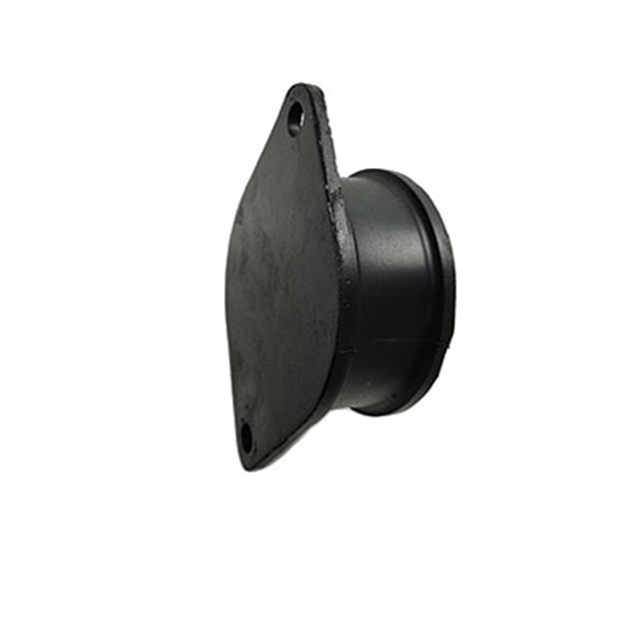
Asphalt rollers and soil compactors present a unique engineering paradox. The machine must generate massive vibrational force at the drum to achieve proper soil or asphalt compaction. Heavy eccentric weights spin rapidly inside the steel drum. They generate hundreds of kilonewtons of downward force. Simultaneously, the machine must protect its own engine, hydraulics, and operator from that exact destructive force.
A Road Roller Rubber Buffer solves this complex paradox. Multiple heavy-duty mounts connect the vibrating drum to the rigid machine frame. These drum buffers maintain maximum compaction efficiency at the ground level. They block those same violent vibrations from traveling upward into the chassis. This prevents severe structural cracking in the roller's frame. They also suppress vibrations transferred from pneumatic tyres in tyred rollers. This ensures smooth asphalt finishes without leaving ripple marks on the fresh mat.
Heavy machinery operators face intense physical strain during long shifts. Continuous exposure to heavy vibrations causes severe medical issues. These include spinal disc degeneration and vascular disorders. High-quality buffers ensure the machine operator remains undisturbed while working.
They drastically reduce Whole-Body Vibration exposure. Mitigating this vibration is mandatory for complying with strict ISO and OSHA occupational health standards. A stable, isolated cabin prevents chronic operator fatigue. It allows operators to maintain precise control over the machine. This improves job site safety and final paving quality. When the cabin shakes violently, the operator cannot steer a straight line. The isolation mounts directly impact the quality of the finished road surface.
Sourcing exact OEM replacements guarantees proper machine function. Aftermarket alternatives often fail to match the precise load-deflection requirements engineered by the manufacturer. Using the wrong mount alters the resonant frequency of the drum. This ruins compaction performance and leaves voids in the asphalt.
Mid-size articulated tandem rollers require specific dimensional tolerances. An HD90 Road Roller Rubber Buffer handles moderate centrifugal forces. It features specific thread sizes, metal plate thicknesses, and rubber densities tailored exactly to a 9-ton machine. It balances flexibility with structural support. You will typically find these mounted in circular arrays around the drum drive motor.
Heavier machines demand entirely different specifications. An HD120 Road Roller Rubber Buffer supports significantly higher load-bearing requirements. The 12-ton machine weight and increased centrifugal force dictate a much denser elastomeric compound. The metallic mounting plates are thicker to prevent warping under extreme shear loads. You cannot interchange these parts without risking immediate mechanical failure. Putting a 9-ton mount on a 12-ton machine guarantees the rubber will tear within the first hour of operation.
Material selection dictates performance, vibration isolation capability, and overall longevity. Natural rubber provides high elasticity and excellent tear resistance. It excels at isolating high-frequency vibrations and acoustic noise. It remains the standard for engine mounts and road roller drums. The natural polymer chains stretch and recover faster than synthetic alternatives.
Polyurethane offers a significantly higher load-bearing capacity. It boasts superior abrasion resistance and stands up to heavy physical impacts. However, polyurethane is generally stiffer than natural rubber. It transmits more micro-vibrations through the mount. We use polyurethane for heavy die-press bumpers and forklift suspension stops.
Base your decision on environmental exposure and primary function. Use natural rubber for standard dynamic isolation where continuous vibration is the main threat. Choose polyurethane when facing heavy singular impacts or severe environmental exposure. Polyurethane resists UV rays, ozone degradation, hydraulic fluids, and extreme thermal fluctuations far better than natural rubber. If your equipment operates in a chemical plant or a heavy oil refinery, natural rubber will degrade rapidly.
Engineers measure elastomeric hardness using Shore A durometer ratings. This metric defines how much the material will compress under a specific weight. Softer compounds provide excellent vibration isolation. They work best for lighter loads and delicate electronic assemblies where maximum dampening is required.
Harder compounds handle heavy impact absorption. They resist severe compressive forces without permanently deforming. Always consult manufacturer load-deflection charts. You must match the Shore hardness to your specific static weight and dynamic load requirements. Using a soft mount under a heavy load causes it to crush flat. This eliminates all isolation properties and creates a solid metal-to-metal contact point.
Shore A Hardness | Material Feel | Primary Characteristic | Ideal Application |
|---|---|---|---|
30 - 45 | Pencil Eraser | Maximum vibration isolation, low load capacity | Sensitive electronics, lightweight instrument panels |
50 - 65 | Car Tire Tread | Balanced isolation and support | Engine mounts, road roller drums, HVAC units |
70 - 85 | Shoe Heel | High load capacity, heavy impact resistance | Loading dock bumpers, crane stops, heavy press mounts |
90+ | Shopping Cart Wheel | Extreme load bearing, minimal deflection | Heavy structural supports, high-wear skid pads |
Mounting configurations vary widely across industrial applications. You must select the correct physical shape and thread type to ensure secure installation.
Type A (Male/Male): Features threaded studs on both ends for secure double-sided mounting between two metal plates. We use these for suspending heavy exhaust pipes.
Type B (Male/Female): Features one threaded stud and one tapped hole for versatile bracket attachments. These work well for mounting electrical enclosures to vibrating frames.
Type C (Female/Female): Features tapped holes on both ends for flush surface installations where protruding studs are hazardous.
Type D/E (Bumper Stops): Designed for single-sided impact absorption, featuring one mounting point and a solid rubber striking face.
You must match the thread pitch and tensile strength of the metallic plates to the application. Undersized threads will shear off under heavy lateral forces. The metal plates must be properly vulcanized to the elastomer. Cheap adhesives fail quickly under dynamic loads. The vulcanization process chemically bonds the rubber to the steel at a molecular level.
Material Type | Vibration Isolation | Impact Absorption | Chemical Resistance | Best Application |
|---|---|---|---|---|
Natural Rubber | Excellent | Good | Low | Engine mounts, road rollers, general machinery |
Polyurethane | Moderate | Excellent | High | Loading docks, heavy impact zones, oily environments |
Synthetic Blends | Good | Good | Moderate | Outdoor equipment, HVAC systems, marine applications |
Routine visual inspections quickly reveal buffer degradation before catastrophic failure occurs. Look closely for delamination between the elastomeric body and the metal mounting plate. A visible gap indicates severe shear stress has ripped the vulcanized bond apart. The mount is now structurally compromised.
Examine the rubber surface for deep cracking. This points to severe ozone degradation or chemical attack from leaking hydraulic fluids. Finally, check for a permanent compression set. Measure the height of the mount. If it has permanently shrunk and no longer returns to its original height when unloaded, the material has lost its elasticity. It can no longer absorb kinetic energy effectively and requires immediate replacement. We call this pancaking in the field. Once a mount pancakes, it transfers all vibration directly into the chassis.
Cheap, low-grade compounds lead directly to accelerated failure. When a substandard mount fails, it transfers raw kinetic energy directly into the machine frame. This results in severe secondary damage to expensive machinery components.
You risk cracking a heavy roller chassis, destroying critical vehicle drivetrains, or shattering delicate electronics. The repair process for a cracked chassis involves extensive welding, massive labor hours, and weeks of operational downtime. The initial savings of purchasing a cheap, unverified part vanish instantly when major structural repairs become necessary. Always prioritize verified load ratings over initial purchase price. A failed fifty-dollar mount can easily cause fifty thousand dollars in structural damage.
Proper installation ensures maximum component lifespan. Never guess the torque values. Follow exact manufacturer torque specifications to prevent thread stripping or warping the metal backing plates. Use a calibrated torque wrench. Over-tightening distorts the metal plate and initiates premature tearing at the vulcanized joint.
Avoid applying twisting forces to the rubber during mounting. Torsion tears the internal elastomeric bonds before the machine even begins operating. If the mounting holes do not align perfectly, fix the brackets. Do not force the mount into place. Ensure even load distribution across multiple mounts. An unbalanced load forces one single component to absorb excessive kinetic energy. This guarantees premature failure of the entire isolation system.
Take these immediate next steps to protect your equipment:
Audit your current heavy machinery for abnormal vibration-related wear, paying close attention to chassis welds and hydraulic fittings.
Inspect all existing mounts for signs of delamination, permanent compression set, or deep surface cracking.
Consult your OEM parts manual to verify exact thread pitches, Shore hardness ratings, and load capacities for your specific machine.
Perform custom load-deflection calculations before installing mounts on newly fabricated equipment to ensure proper weight distribution.
A: Lifespan depends entirely on operating hours, environmental exposure, and load cycles rather than calendar years. A mount working continuously in a high-shear, oil-heavy environment may last only a few thousand hours. Conversely, a purely compressive mount in a clean, climate-controlled facility can easily last over a decade before requiring replacement.
A: Yes, but you must understand the mechanical trade-offs. Polyurethane handles heavier direct impacts and resists oils and chemicals much better than natural rubber. However, it is generally stiffer. It transmits more high-frequency vibration into the machine chassis, making it less ideal for delicate oscillation isolation.
A: Shore hardness requirements depend on the static weight of your machinery and the dynamic frequency of the vibration. Heavier loads require harder compounds, typically 60 to 75 Shore A, to prevent crushing. Lighter loads need softer compounds, around 40 to 50 Shore A, to isolate vibrations effectively. Always refer to manufacturer load-deflection charts.
A: No. While some models share identical thread sizes, the required load capacity differs vastly. A 9-ton compactor generates significantly less centrifugal force than a 12-ton machine. Direct swaps are highly risky. Using an underrated mount causes immediate shear failure, severe chassis damage, and poor asphalt compaction.
A: Delamination usually occurs when lateral shear stress exceeds the component's design limits. It can also result from poor vulcanization during the manufacturing process. Additionally, prolonged exposure to harsh chemicals or hydraulic fluids degrades the bonding agent, causing the metal plate to tear away from the rubber under load.
A: They drastically reduce hazardous acoustic noise levels across industrial facilities. More importantly, they mitigate Whole-Body Vibration exposure for heavy equipment operators. By isolating the cabin from harsh mechanical shocks, they ensure an undisturbed operating experience, preventing chronic fatigue and long-term musculoskeletal injuries required by OSHA standards.


